Hardware Buyer's FAQ: National Hardware Gate Kits, Mending Braces, Water Heater Connectors & Cutting Pipe Straight
-
What's a National Hardware rustic modern gate kit?
-
What is a National Hardware mending brace, and when should I use one?
-
Do I need a water heater connector with a ball valve?
-
How do you cut pipe straight with an angle grinder?
-
Are "heavy-duty" hinges worth the extra cost?
-
Why did my National Hardware order arrive in four different packages?
-
I searched "NHL cup playoffs bracket" and landed here. Is this the right place?
Every week, someone in our company sends me a question about a part, a tool, or a fitting. Usually it starts with "I'm not sure if this is what we need." Most of the time, the answer comes down to specs—not the brand on the box. I'm the admin who places the orders for our maintenance team. I process about 60-80 hardware orders a year for a 200-person company, so these are the questions that actually show up in my inbox.
What's a National Hardware rustic modern gate kit?
If you searched for "National Hardware rustic modern gate kit," you've probably seen a black, self-closing latch set with clean lines. The "modern rustic" style is really just matte black or dark bronze hardware that looks good on wood or metal gates. The kit usually includes hinges, a latch, screws, and sometimes a stop.
The gate failure in March 2023 changed how I think about gate kits. We installed a gate kit on a 10-ft. cedar gate and it sagged within a month. The hinges were too small for the gate weight—not the brand's fault, our fault for not checking the rating. We replaced it with a heavier-rated kit and the same gate is still fine.
The finish also matters. We ordered 25 sets of the rustic black finish for another property in 2023. I almost went with standard galvanized because the black looked fragile. But it's powder-coated, and it's held up through a rainy winter and a summer of direct sun. No rust yet. (Should mention: that property is inland; salt air is a different test.)
Weight rating first. Style second. A gate kit rated for 70 lbs. won't work on a 150-lb. gate. Check the hinge thickness and the gate specs before you buy—especially if you're ordering for a customer who expects it to last.
What is a National Hardware mending brace, and when should I use one?
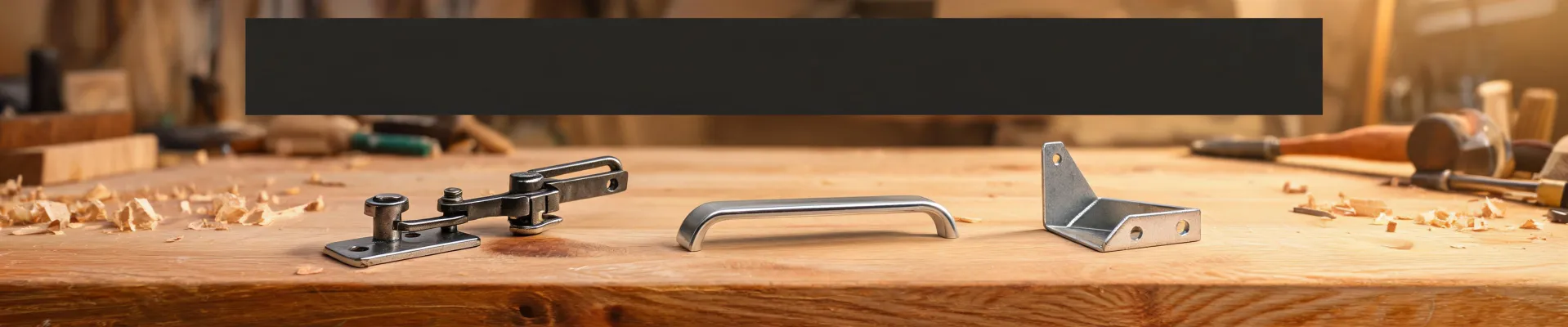
A mending brace—also called a mending plate—is a flat piece of steel or zinc alloy with pre-drilled holes. You screw it over a cracked or weak joint to hold it together. It's not the same as a corner brace; it sits flat, not across the corner. Use it for reinforcing a split board, a loose gate joint, or a wobbly furniture frame.
I didn't fully understand the value of these until a few years ago. Our maintenance guy used three of them to resurrect a shed door that had sagged so badly it wouldn't latch. We were ready to buy a new door. Instead, we spent about $8 on mending braces and 20 minutes of labor. That door still works today.
Here's something vendors won't tell you: the screw length is more important than the plate size. If the screws are too short, the brace is just decoration. For a 1.5-inch thick board, use screws that bite at least 3/4 inch into the wood. And for a crack longer than 12 inches, use a plate that covers the entire crack—not a short one centered in the middle.
Also, if you see "mending brace" in an online catalog, it's often the same thing as a mending plate. Different names, same part.
Do I need a water heater connector with a ball valve?
Short answer: yes, if you don't want to shut off water for the whole building to fix a small leak. A water heater connector with a ball valve is a braided stainless steel flex line with a shut-off valve built into the cold water side. You install it once, and the next time the tank needs service, you turn the valve at the tank instead of running to the main shut-off.
I learned this the hard way in 2021. I ordered standard connectors—no ball valve—because the price was slightly lower. Our building engineer asked, "Where is the dedicated shut-off?" I said, "The main line." He just stared at me. We had to coordinate with the whole building, shut down the water, and deal with complaints. It was not a good afternoon. Now I order the ball-valve version every time.
Code is another reason. Most U.S. jurisdictions require a shut-off valve at the water heater inlet. According to the Uniform Plumbing Code (IAPMO), the valve has to be accessible. A connector with a built-in valve is a neat way to meet that rule, but only if the tank is installed with enough room to actually reach the valve. If the tank is crammed into a closet with no clearance, the inspector will flag it.
One more thing: check the certification stamp. Look for "UPC" or "CSA" on the connector body. That tells you it's been tested against plumbing standards. I've seen cheap connectors without those stamps—same shape, but I wouldn't trust them behind a wall.
How do you cut pipe straight with an angle grinder?
Cutting pipe straight with an angle grinder is all about marking the line. Freehand cutting is why pipes come out crooked. Here's a simple method our maintenance guy uses: wrap a piece of paper around the pipe with one edge aligned. Tape it at the seam. Now you have a straight line that goes all the way around. Mark it with a permanent marker, then remove the paper.
Clamp the pipe so it doesn't roll. Use a thin cut-off wheel (1/32 inch or about 0.8 mm), and start the grinder before it touches the pipe. Run the disc along the line, cutting from the top to the front, then rotate the pipe an inch at a time. Don't try to cut through in one pass—that's how discs bind and snap. It's not the fastest way, but it gives you a square cut.
People think you need a steady hand. Actually, you need a straight reference line. A steady hand helps, but the line does the real work.
Safety: eye protection is non-negotiable. Gloves, a grinder guard, and a firm grip. Let the disc stop completely before you set the grinder down. And if you're cutting galvanized pipe, do it outdoors or with a fan—the fumes are not good to breathe.
Are "heavy-duty" hinges worth the extra cost?
Sometimes. "Heavy-duty" usually means thicker steel and a more durable finish. But it doesn't automatically mean the right hinge for your gate. The right choice depends on the gate weight, the hinge size, and the environment. A 4-inch hinge with 0.10-inch-thick steel is heavier than a 3-inch hinge at 0.08 inches. But if the gate is a lightweight aluminum frame, the bigger hinge might be overkill.
What most people don't realize is that finish matters as much as thickness. Two hinges can have the same steel thickness, but one corrodes after a year outside because the coating is poor. That's why quality hardware lists a salt spray rating. According to ASTM B117, a 500-hour rating means the finish survived 500 hours in a salt spray chamber before rust formed. A 200-hour rating is not the same thing.
People think expensive hinges last because they're expensive. Actually, they last because the manufacturer used better steel and a better coating—those materials cost more. The price follows the quality, not the other way around.
For standard gate use, look for a hinge with a clear finish rating and a weight capacity above your gate weight. For commercial doors, you'd want hardware that meets ANSI/BHMA A156.1. That's probably more than you need for a garden gate, but it's good to know the difference.
Why did my National Hardware order arrive in four different packages?
A lot of B2B hardware orders ship from multiple warehouses. The gate hinges might come from a regional distribution center, and the mending brace might ship direct from the manufacturer. It's normal. The order was "complete"—it just took a few different paths to your door.
What most people don't realize is that split shipments usually save time. The system routes each item from the nearest stock location, so you're not waiting for a single warehouse to assemble everything before sending it. The trade-off is that you get to feel like you're opening presents for two days.
One practical tip: when a parcel arrives, note the packing slip and check it against the order before you put it away. We once had a missing box that turned out to be "shipped separately." I spent an hour on the phone before someone looked at the tracking and saw it was out for delivery. In hindsight, I should have checked the tracking details first. But the system doesn't always make that obvious.
I searched "NHL cup playoffs bracket" and landed here. Is this the right place?
No, we don't do hockey brackets. But the good news: you're in the right place if you need a metal bracket for a gate, shelf, or fence. Hockey brackets are made of paper (or pixels). Metal brackets are made of steel, and they hold things up.
It's actually a mix-up that happens more than you'd think. "National Hardware" and "National Hockey League" both start with "National," and if you type fast, your search can go sideways. One of our customers once asked us to sponsor their office playoff pool. We passed, but it gave me an idea: maybe we should start selling a "bracket" that holds a whiteboard marker. Not yet, though.
Anyway, if you need a gate bracket—or advice on gate hardware—come back. If you're here for the hockey bracket, good luck with your picks. You'll need it.

Maren Jorgensen
Maren Jorgensen is an independent hand tool and torque applications analyst covering wrenches, pliers, screwdrivers, hammers, sockets, ratchets, hex keys, and tool sets. She applies ISO 6789-1 torque-tool conformance principles while examining jaw capacity, leverage, fastener engagement, torque range, accuracy, handle geometry, and material hardness. Her practical guides help tradespeople and procurement teams select suitable tools, plan controlled tightening, and compare durability without relying on brand reputation alone.