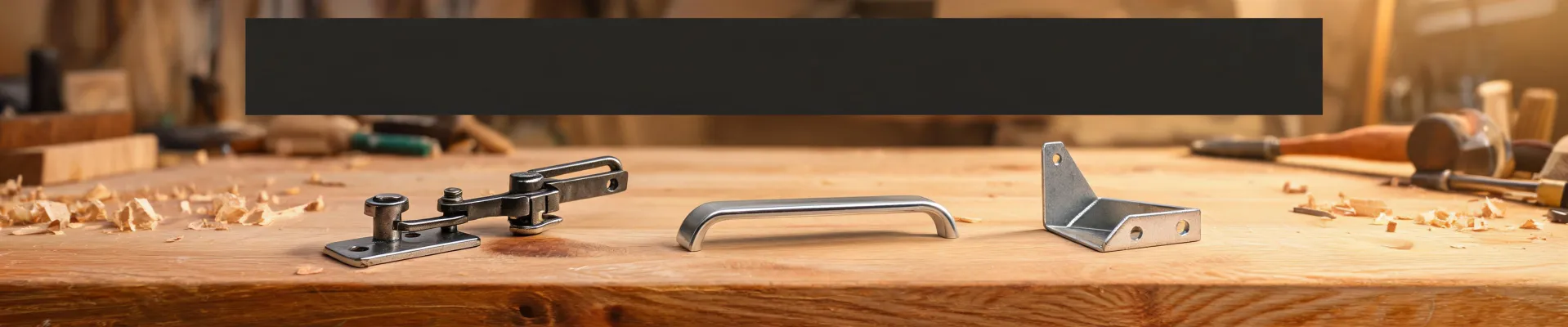
Why Small Hardware Kills Big Deadlines—And When National Hardware Makes Sense
The $40 part that stopped a $12,000 gate install
In March 2024, 36 hours before a gate install, a contractor called me at 6:40 a.m. They had the posts set, the hinge plates lined up, and the crew scheduled. The only problem: the national hardware swinging door latch they’d ordered had the wrong handing. It was a $40 part. If we didn’t fix it, the delay would hit a $12,000 project and push the client’s opening back a week.
I coordinate emergency hardware sourcing for a regional construction supply company. I’ve handled 200+ rush orders in seven years, including same-day turnarounds for contractors and facility maintenance clients. Here’s what I’ve learned: the part is rarely the real problem. The spec is.
If you’ve ever typed national-hardware into a search bar at 5 a.m. because a crew is standing around, you know the feeling. You’re not shopping. You’re triaging.
The real issue isn’t the part—it’s the spec
A lot of buyers treat hardware like a commodity. A latch is a latch. A hook is a hook. A cup hook is a cup hook. That assumption works right up until it doesn’t.
Take a national hardware swinging door latch. The listing might say “swinging door latch” and show a clean product photo. But the details that matter are buried: handing (left or right), backset, strike size, finish, gate thickness, and whether it’s rated for the load your gate actually sees. I’ve watched a crew install a latch backward because nobody checked handing. The gate closed, but the latch wouldn’t catch. That’s not a hardware failure. That’s a spec failure.
The same pattern shows up with National Hardware zinc plated hook & eye. The zinc plating is not just a color. It’s a corrosion-protection layer. If you’re using it near a coast, on a pressure-treated fence, or in a humid barn, the plating thickness and passivation matter. A buyer might compare two hook & eye sets, see the same “zinc plated” label, and assume they’re interchangeable. They’re not.
Then there are 7/8" cup hooks. They look simple. But thread type, shoulder length, and pilot-hole size vary. I once assumed a 7/8" cup hook was a 7/8" cup hook across brands. Didn’t verify. Turned out the shoulder sat proud on a finished cabinet, and the customer rejected the whole batch. We ate the rework.
And if you’ve read low profile washer tray reviews, you’ve probably noticed the same theme: buyers assume “low profile” means a specific height. It doesn’t. It means whatever the manufacturer decided it means. One tray might clear a drawer slide; another might not. Reviews are full of people who learned that the hard way.
Why does this matter? Because a 1/16" difference can turn a 20-minute install into a return trip, a reorder, and an angry phone call.
What I mean is that hardware specs are a chain. The latch, the strike, the hinge, the post—each one has a tolerance. If one link is off, the whole gate fights you. You can force it, shim it, or grind it. But you’ll pay for that in labor, callbacks, and reputation.
The hidden costs of guessing
Let’s talk about what guessing actually costs. Not the sticker price. The total cost.
Honestly, I saved $80 once by buying a cheaper hook & eye assortment instead of the specified zinc-plated set. The finish looked close enough in the photo. It wasn’t. The hooks started showing corrosion within months on an exterior gate. We ended up spending about $400 on overnight replacements, plus labor to swap them out. That $80 “saving” cost us five times as much.
There’s also the frustration factor. After the third late delivery from the same vendor, I was ready to give up on them entirely. You’d think written specs would prevent misunderstandings, but interpretation varies wildly. One supplier reads “zinc plated” as electroplated. Another reads it as hot-dip galvanized. Both are “zinc,” but they behave differently in the field.
And then there’s the safety side. If you search how to cut bricks with an angle grinder, you’ll find dozens of videos. Most of them skip the part that matters: the blade. A standard abrasive wheel will cut brick, but it creates silica dust and can glaze or shatter. A diamond blade is the right tool for masonry. You also need eye protection, hearing protection, and a respirator rated for silica. A grinder is great for rough cuts, not for finish work. If you’re cutting a visible brick arch or a precise opening, you want a wet saw.
“The value of a guaranteed spec isn’t the paperwork—it’s the certainty. A clear spec turns a rush order into a predictable one.”
Per FTC guidelines (ftc.gov), claims like “zinc plated,” “corrosion-resistant,” or “heavy-duty” must be truthful and substantiated. That’s not just a legal footnote. It’s a reminder that the words on a label are a promise. When the promise is vague, the risk lands on your project.
There’s a reason I now build in a 20–30% buffer on lead times. It’s not because I like padding schedules. It’s because the last 10% of a rush order is where the surprises live. A vendor confirms a part, then finds it’s in a different warehouse. A truck gets delayed. A plating batch doesn’t match. If you have no buffer, every surprise becomes an emergency.
What actually works (and when it doesn’t)
After enough rush orders, I stopped trying to memorize part numbers. I started building a spec sheet for every job. It’s boring. It works.
- For door and gate hardware: Write down handing, backset, finish, gate thickness, and load rating before you order. If you’re buying a national hardware swinging door latch, confirm the handing against the actual gate swing.
- For hook & eye and cup hooks: Measure the wire diameter, thread length, and shoulder. For 7/8" cup hooks, check the pilot-hole size and whether the shoulder needs to sit flush. For National Hardware zinc plated hook & eye, verify the plating spec if the installation is exterior or coastal.
- For washer trays: Don’t trust the name. Read low profile washer tray reviews for actual dimensions, then confirm the height against your drawer slide or cabinet frame.
- For masonry cutting: Use a diamond blade, not a general-purpose abrasive wheel, and treat how to cut bricks with an angle grinder as a rough-opening task. For visible or precision cuts, rent a wet saw.
Here’s the honest limitation: standard hardware from National Hardware and similar national distributors is a solid fit for routine gate, door, cabinet, and general repair work. It’s widely available, consistent enough for most jobs, and easy to source in a hurry. But if you need custom architectural hardware, high-security locks, exact color matching, or a one-off fabrication, standard parts may not be the right call. That’s not a knock on the brand. It’s a boundary.
If you’re in the 80%—standard gate latch, exterior hook & eye, cabinet cup hooks, common washer tray—you can usually solve it with a national-hardware distributor and a clear spec sheet. If you’re in the 20%—custom, high-security, or precision finish—slow down and call a specialist. The rush fee you save will be small compared to the rework you avoid.
If you’re sourcing for a distributor or a contractor, don’t just ask for the part number. Ask for the spec sheet, the finish, the load rating, and the country of origin if that matters to your client. If you’re buying from a national-hardware distributor, confirm that the SKU matches the spec you wrote—not just the description on the website.
And if you’re in a true emergency, don’t optimize for price. Optimize for certainty. Pay for the verified part. Pay for the overnight shipping. Then write down what went wrong so you don’t repeat it on the next job.
Bottom line
The small hardware problem is rarely about the small hardware. It’s about unclear specs, unverified assumptions, and the cost of discovering both after the crew is already on site. Fix the spec first. Then the part is easy.

Amara Nwosu
Amara Nwosu is an independent hydraulic tool and pump systems analyst covering jacks, cylinders, pullers, torque wrenches, hand pumps, power pumps, and porta-power equipment. She applies ISO 4413 safety principles while examining rated pressure, cylinder force, stroke, oil volume, flow, return type, hose condition, load holding, pressure loss, and relief protection. Her technical guides help maintenance and construction teams configure compatible systems, verify safe capacity, and diagnose slow or unstable operation.