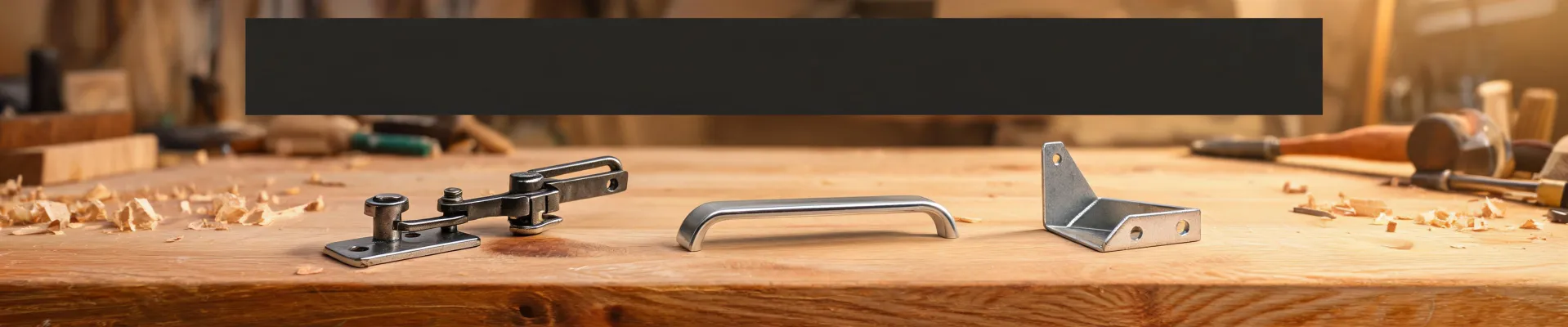
National Hardware Automatic Gate Latch N101-352 and Gate Hinges vs. Will-Fit: A Quality Inspector’s Comparison
I’m a quality/compliance manager at a hardware distribution company. Most weeks I review a couple hundred SKUs—latches, hinges, pliers, fasteners, tools—before orders go to retailers or job sites. I’ve rejected shipments because a faceplate was off by a fraction of an inch and because a “galvanized” batch had patchy coating. That doesn’t make me anti-anything; it makes me a spec person.
This article is a comparison between two ways people handle a gate maintenance purchase. Option A is SKU-based: order the national hardware automatic gate latches n101-352, pick National Hardware gate hinges from a real spec line, and add the tools you actually need to the same cart. Option B is what I call “will-fit” shopping—or, more accurately, unverified shopping: go to a store or marketplace, choose an automatic gate latch that looks close, grab hinges that seem to match, and pick up tools one stop at a time. I’ll compare those paths on four dimensions: specification clarity, gate behavior, tools, and overhead.
Dimension 1: Parts numbers beat “looks about the same”
When someone searches national hardware automatic gate latches n101-352, they aren’t just saying “automatic gate latch.” They are asking for a specific latch-body-to-strike geometry. From my side of the table, that SKU points to drawings, a hole template, and a finish spec. I can check those before the product reaches a customer.
A “universal” or “will-fit” automatic latch is different. The packaging may say “fits most gates,” but that is not a technical specification. In Q1 2026 I rejected a 200-unit delivery of unlabeled universal latches because the latch arm barely caught the keeper when mounted on a test gate. The vendor called it “within tolerance.” We sent them back.
The conclusion on this dimension is repetitive but practical: for a routine replacement, an N-number or exact SKU gives you a baseline you can verify. “Will fit” gives you a guess.
Dimension 2: The gate hinge determines whether the latch does its job
Often the real cause of a gate latch failure isn’t the latch; it’s the hinge. If the gate sags even a little, the latch won’t align. That’s why I treat National Hardware gate hinges as part of the same selection, not as a separate decision.
Two hinge types come up most: strap hinges and spring-loaded hinges. Strap hinges keep the gate panels aligned and are simple to retrofit, but they don’t close the gate by themselves. Spring-loaded hinges add a closing force. That helps an automatic latch catch, but it also adds tension and hinge-pin wear.
When I inspect hinge batches, I look for stiff pins, even knuckle gaps, and clean finish. The part that surprises many buyers: a more expensive latch won’t fix sagging caused by a weak hinge. The hinge choice should come first.
Dimension 3: The tools that turn a gate repair into a restock order
Gate hardware jobs rarely arrive by themselves. The same person who needs an N101-352 often searches for a cobra pliers set, two pairs of pruning shears, and a 4.5-inch angle grinder. Honestly, I’m not sure why those three keep showing up together. My best guess is that gate and fence maintenance season is also property cleanup season.
A cobra pliers set is basically tongue-and-groove pliers with curved serrated jaws. When I compare pliers sets, I look at jaw capacity, tooth bite, and joint firmness more than brand graphics. A pliers set with no model marking is hard to reorder, which makes it a weak link in a maintenance kit.
For two pairs of pruning shears, write the quantity and model on the order. If you’re typing “2 pruning shears official price,” you’re trying to avoid an arbitrary listing price. Do it. Official price means the current manufacturer list or authorized distributor price, not a screenshot from an unknown marketplace. And note the date and version of the price list you used.
The question “where can i buy a 4.5-inch angle grinder?” is common. The direct answer is: through a local hardware store, an industrial supplier, or the tool section of a national hardware supply order. What actually matters is checking arbor size, wheel guard, and no-load speed before ordering. The surprise wasn’t that prices vary; it was how much motor differences affect a stalled cut.
Dimension 4: Efficiency without absolutes
Efficiency doesn’t mean SKU ordering is always faster at the start. It rarely is if you count research time. A local hardware shop can hand you a latch in five minutes. But for repeat work, standardized ordering tends to create fewer data-entry errors and better records.
Switching our own replacement stock order to a saved digital list cut turnaround from about five days to two. That number isn’t magic; it came from removing repeated manual re-entry.
The most frustrating part of gate latch sourcing is when the same issue repeats: someone orders the latch, ignores the hinge, skips the tools, and then needs another order. You’d think one code would be enough, but the gate system needs the whole list.
I still buy from local shops for custom one-offs. Traditional hardware stores have real strengths: immediate answers, staff who understand old gates, and zero shipping wait. Efficiency is not an excuse to ignore them.
Which path should you choose?
There is no universal answer, but there are patterns:
- For standard walk gates or repeated maintenance, pick Option A. Use the N101-352 gate latch from National Hardware and choose gate hinges with documented spec.
- For a one-off repair with the gate in front of you, Option B is legitimate. Buy local, but compare latch strike geometry and hinge pin play before leaving the store.
- For tools like a cobra pliers set, two pruning shears, or a 4.5-inch angle grinder, decide based on urgency. If warranty records matter, order through a supply account. If you need it today, use a store.
I don’t get paid to say one brand solves everything. I get paid to make sure the delivered product matches the approved specification. For most gate hardware, that starts with a specific SKU, not a picture of a latch.

Maren Jorgensen
Maren Jorgensen is an independent hand tool and torque applications analyst covering wrenches, pliers, screwdrivers, hammers, sockets, ratchets, hex keys, and tool sets. She applies ISO 6789-1 torque-tool conformance principles while examining jaw capacity, leverage, fastener engagement, torque range, accuracy, handle geometry, and material hardness. Her practical guides help tradespeople and procurement teams select suitable tools, plan controlled tightening, and compare durability without relying on brand reputation alone.