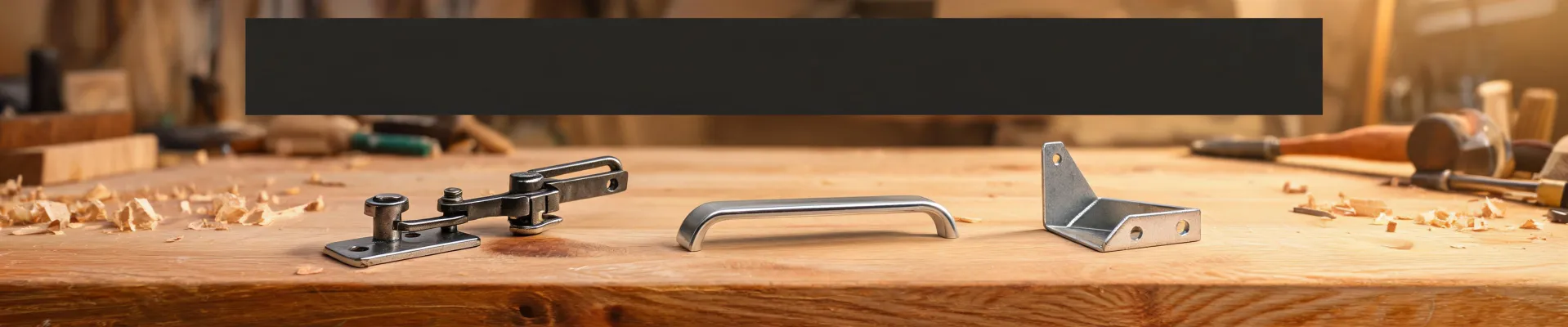
National Hardware FAQ: Barn Door Locks, Logo Checks, Tool Racks, Drill Chucks, and Paver Cuts
-
What should I check before buying a National Hardware barn door lock?
-
How can I verify the national hardware logo on packaging?
-
Is a multi hanger mount tool storage rack worth it?
-
Can I replace the chuck on any hammer drill?
-
How do I cut pavers with an angle grinder safely?
-
What's the biggest ordering mistake with National Hardware parts?
-
When should I not use these products?
I've been handling hardware sourcing and contractor orders for 12 years. I've personally made (and documented) 11 significant mistakes, totaling roughly $14,800 in wasted budget. Now I maintain our team's pre-check list so nobody repeats them. This FAQ covers the questions I get most often about National Hardware barn door locks, logo verification, tool storage racks, hammer drill chuck replacement, and paver cutting with an angle grinder.
Here's what's inside:
- What should I check before buying a National Hardware barn door lock?
- How can I verify the national hardware logo on packaging?
- Is a multi hanger mount tool storage rack worth it?
- Can I replace the chuck on any hammer drill?
- How do I cut pavers with an angle grinder safely?
- What's the biggest ordering mistake with National Hardware parts?
- When should I not use these products?
What should I check before buying a National Hardware barn door lock?
Measure first. Every time. Door thickness, door weight, track height, and backspace. I said 'standard barn door.' The supplier heard 'standard interior door.' In September 2022, I ordered 14 National Hardware barn door locks for a restaurant partition. The doors were 1-3/4 in. thick. The kits were built for 1-3/8 in. doors. Fourteen wrong locks, about $1,400 in returns, and a 5-day delay. That's when I made a pre-check list.
Here's the thing: a barn door lock is usually for privacy or light-duty interior use. If you're securing an exterior entry, a retail cage, or a high-security door, that's a different category. Check the package spec sheet for door thickness range, mounting type, and handing. Don't trust a listing that says 'universal' or 'fits all doors.' Per FTC guidelines (ftc.gov), claims should be truthful and substantiated. If the spec isn't clear, ask for the part number and a photo of the label.
How can I verify the national hardware logo on packaging?
Don't rely on memory. Logos change. I've seen old and new versions on the same shelf. The fast check is not the logo alone. Check the part number, the brand spelling, the barcode, and the official catalog page. If the logo looks blurry, stretched, or printed on a cheap label, slow down.
In Q1 2024, we received 40 hinges labeled with a National Hardware-style logo. The part numbers didn't match the catalog. We caught it before install, but it cost us 3 hours of verification and a lot of emails. That's why I now photograph the label and compare it to the distributor's spec sheet. Buy from authorized distributors when traceability matters. And remember: FTC rules apply to product claims, not just ads. If a seller can't substantiate the brand or spec, treat it as a risk.
Is a multi hanger mount tool storage rack worth it?
For most shops and service vans, yes. It gets tools off the floor and makes inventory visible. But the rack is only as good as the anchor and the load rating. I learned that in 2021. We installed six multi hanger mount tool storage racks in a service van. We loaded them with impact wrenches, sockets, and cordless drills. Three weeks later, two racks pulled out of the wall. We'd used the wrong anchors into thin plywood. Cost: about $320 in repairs and half a day of lost work.
Use lag bolts into studs or steel channel. Keep the heaviest tools low and centered. Add locking clips if the van moves. If your tools exceed the rack's stated capacity, or you're in a high-vibration trailer, step up to a heavier-duty system. A rack isn't a shelf for everything. It's a system. Treat it like one.
Can I replace the chuck on any hammer drill?
No. That's the short answer. Some chucks are threaded. Some are pressed on. Some are integrated into the spindle, and some hammer drills use SDS-plus or SDS-max systems. Before you order a hammer drill chuck replacement, get the model number and the spindle thread. Common threads include 1/2 in.-20 and 5/8 in.-16, but they aren't universal.
In 2020, I tried a hammer drill chuck replacement on a drill with an integrated chuck. I ordered an $85 chuck, waited four days, then couldn't remove the original. Return shipping was $22, and we lost two days of production. Check the manual or parts diagram. Look for a left-hand screw inside the chuck. If you can't find a removable screw or a threaded spindle, stop. If the drill is under warranty, replacing the chuck may void it. For light-duty drills, replacement often isn't worth the labor.
How do I cut pavers with an angle grinder safely?
Use the right blade, the right guard, and the right PPE. For how to cut pavers with an angle grinder, you want a diamond blade rated for masonry. Wear safety glasses, a face shield, hearing protection, and an N95 or better respirator. Use the guard. Support the paver so it doesn't pinch the blade.
In 2019, I cut 40 pavers dry in a garage. Bad idea. Dust covered everything, the blade glazed, and cleanup took two extra hours. We spent about $120 on cleanup and replacement blades. Now I use a wet cut or a dust shroud whenever possible. Mark the line, score a shallow pass, then cut in two or three passes. Don't force the blade. For large jobs or thick pavers, rent a wet saw. An angle grinder is great for cuts, notches, and small adjustments. It isn't a production paver saw.
What's the biggest ordering mistake with National Hardware parts?
Assuming 'standard' means the same thing to everyone. I said 'standard size.' The warehouse heard 'what we usually stock.' We were using the same words but meaning different things. I discovered it when the order arrived and half the fasteners didn't fit the pre-drilled holes.
We didn't have a formal spec-check process. The third time we ordered the wrong quantity or finish, I finally created a one-page checklist. Now we confirm part number, dimensions, finish, pack quantity, and a photo before the PO goes out. We've caught 47 potential errors using that checklist in the past 18 months. That applies to barn door locks, hinges, latches, and even simple screws. If you're a distributor or contractor, build the checklist. It's boring. It works.
When should I not use these products?
Here's the honest limitation. A National Hardware barn door lock is not the right choice for a high-security exterior entry. A multi hanger mount tool storage rack is not for overloaded mobile use beyond its rating. Hammer drill chuck replacement is not for integrated chucks. And an angle grinder is not the tool for a 500-paver production cut.
If your project needs fire-rated door hardware, check the assembly rating and local code. If you're in a coastal or marine environment, look at stainless-steel options and confirm the grade. If you need a keyed exterior lock with a security rating, ask for that category—not an interior privacy latch. Saying 'this isn't the right fit' is better than forcing a product into a job it wasn't made for. I've learned that the expensive way.

Omar Vukovic
Omar Vukovic is an independent garden and outdoor power equipment analyst covering pruning shears, loppers, hedge shears, lawn mowers, tillers, chainsaws, and related cutting systems. He applies IEC 62841-4 safety principles while comparing blade geometry, chain speed, bar length, cutting capacity, battery runtime, vibration, kickback controls, noise, ergonomics, and maintenance access. His practical articles help landscape teams and buyers choose equipment for vegetation, workload, operator control, serviceability, and seasonal operating conditions.