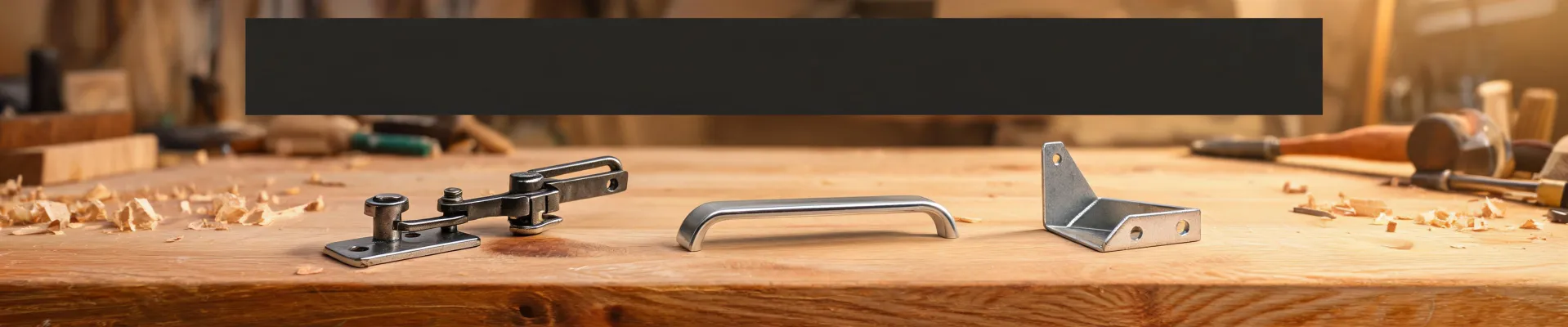
The Right Hardware for the Right Situation: A Quality Inspector's Guide to Gate Kits, Welders, Hoists, and Locks
-
The three questions that decide everything
-
The sagging gate: is a bolt-on anti-sag gate kit enough?
-
The self-latching gate: who should buy the Magna Latch top pull?
- 'Welding machines near me'—what are you actually asking for?
-
The electric chain hoist: rent, buy, or skip?
-
About that 'how to pick a door lock knob' search
-
Which situation are you actually in?
I've spent six years as a quality lead at National Hardware. That means I review product shipments before they go out the door—roughly 500 inbound batches a year—and I read the return reports when something comes back. The pattern is hard to miss: most 'defective product' claims aren't defects. They're misapplication. The right product, in the wrong situation, fails for reasons the product had nothing to do with.
When I first took this seat, I assumed the return numbers were driven by manufacturing flaws. Didn't take long to see the truth. A perfectly good anti-sag gate kit does nothing for a gate whose post is leaning. A nice latch won't fix a gate that's racked. A serious welder is wasted on someone who welds twice a year. Context is everything.
So this guide won't hand you one universal answer. There isn't one. Instead, I'll walk you through five common hardware situations, the way I'd talk through them in the office.
The three questions that decide everything
Before we get into products, run these three questions past yourself. They settle more than any spec sheet:
- When does this need to be done in the real world? Not 'when would be nice'—when is the deadline?
- How often will it actually get used?
- What's the cost if it doesn't work on day one?
We'll come back to these at the end.
The sagging gate: is a bolt-on anti-sag gate kit enough?
If your gate is dragging along the driveway, you've probably found the National Hardware anti-sag gate kit in a search. It's a galvanized steel brace that runs diagonally across the gate, with a turnbuckle in the middle to pull it back square. I've reviewed enough of these shipments to say this: it's a legit fix for a specific problem—a sagging gate on a sound frame.
What people skip is the second part. The kit pulls the gate square. It won't fix a leaning post, loose hinges, or a rotted frame. In that scenario, a rigid brace can actually make things worse, because now every load transfers straight to the weak points. Fix the post before you fix the gate. If you can jack the gate up and it holds, you're fine. If the post moves when you push the gate, that's your real project.
When the DIY path makes sense: post is plumb, hinges are tight, gate leaf is in decent shape. That's a weekend job—a drill, a level, sockets, maybe 45 minutes of actual work, plus a few turns on the turnbuckle to get the swing right.
Two things to check before you order:
- Steel gauge. Most kits quote 12-gauge. Heavy-duty ones step up to 10-gauge. Solid wood or metal gates: go heavy; the price difference is small.
- Coating. 'Rust-resistant' and 'galvanized' are not the same thing. Look for a real zinc-coating spec, like ASTM A653, especially for an outdoor gate.
Here's something product photos won't tell you: the coating spec matters more than the price tag. I've seen budget kits with flash coatings start rusting in under two years. Decent galvanized kits still look fine at year eight. The spec sheet tells you more than the pictures.
On timing: if that gate has to pass an inspection or look decent by a specific date, pay for guaranteed delivery. The upgrade is twenty or thirty dollars. A missed inspector or a tenant complaint is a lot more than that.
The self-latching gate: who should buy the Magna Latch top pull?
A National Hardware Magna Latch Top Pull is a gate latch built into the pull handle at the top of the gate. You open the gate with a natural pull, it swings shut, and it latches itself. No bending down, no separate bolt to line up. For side yards, pool fences, and utility gates, that's a genuinely nice piece of hardware.
The scenario split is quick:
New gate, solid posts: buy it. Installation is straightforward and the self-latching action is reliable. Existing gate with any sag or swing issues: fix the gate first. A latch that has to fight a racked gate will drive you insane, and the failure will look like a bad latch when it's really the gate.
From what I see in the return flow, a quality latch takes up a little misalignment but not much. Gate posts move with the seasons, so budget ten minutes twice a year to check the strike plate. When a latch 'quits' after a year, nine times out of ten the gate moved, not the latch broke. Hinge pins are the first suspect.
For durability reference, ANSI/BHMA tests Grade 2 hardware to about 400,000 cycles. That's decades at normal gate use. If your latch dies long before that, stop looking at the latch.
'Welding machines near me'—what are you actually asking for?
Here's a sentence that might annoy a few people: if you searched 'welding machines near me,' the answer is probably not 'go buy a welding machine.'
Not because welding is a bad skill to have. It's because that search is usually about a specific job, and a specific job doesn't usually justify a machine purchase. Three different situations hide behind that search, and they get three different answers.
One-off repair
One broken railing, a cracked gate, a snapped trailer tab. Hire a local fabricator or mobile welder. A repair weld at a local shop is a small labor cost, and that includes someone who already owns the machine, the gas, the wire, and the skill. A decent 240V MIG setup with gas, wire, helmet, gloves, and a fire extinguisher typically runs well over a thousand dollars. For one repair, the math doesn't close.
Regular projects
Rental properties, farm fences, trailers, your own fabrication hobby. Now buying starts to make sense. Match the machine to your shop's power: a 120V flux-core machine handles light steel and stores easily. For anything over about 1/8-inch, move up to 240V MIG with shielding gas. That covers most property maintenance work. And a local welding supply shop is worth your time—they'll answer questions, match wire and gas, and usually service what they sell.
Production or business
If you're going to make money with it, skip hobby grade. The spec that matters is duty cycle, not just the wattage. A machine rated 20% duty cycle at full output means roughly two minutes of welding for ten minutes of cooling. That's painful on an eight-hour day. Buy for the cycle, not the showroom shine.
Whichever branch you land on, don't skip the safety side. OSHA 1910.252 exists because welders burn themselves, breathe bad fumes, and start fires. If you've never run a bead, get someone experienced to walk you through the first session. Bad habits form fast and they're hard to unlearn.
And one more thing: welding machines ship heavy. If there's a deadline attached—fencing season, a show, a repair before winter—local matters. A machine that arrives in a week doesn't help you weld a gate on Saturday.
The electric chain hoist: rent, buy, or skip?
An electric chain hoist is one of those tools that looks like a great investment until you count how often it gets used. In quality review, I don't ask 'what's your budget?' I ask 'what's your duty cycle?'—how many lifts per hour, at what load, for how long.
Three patterns:
Light use, a few lifts a month in a barn or workshop: rent, or stick with a manual chain block. A decent electric hoist costs real money, and a hoist that sits still costs the same as one that works.
Regular use, a working shop or small operation lifting every day: buy. But size it to the work, not the load. Two specs that almost always get missed:
- Lift height. A standard 10-foot model is a different product from a 20-foot version. We see return requests based on lift height way too often.
- Duty cycle at rated load. If the hoist is certified for 15 lifts per hour at full load and your crew runs 40, it will trip the thermal and quit when you're half-rigged. That's not a defective hoist. That's a spec mismatch.
Here's something I learned after assuming all 1-ton hoists were close: the chain is not just chain. Some imports use chain that doesn't seat properly in the sprocket, which is how a hoist becomes a safety issue. If a manufacturer can't confirm ASME B30.16 compliance, I won't put it in front of a customer. We rejected an entire batch in 2024 over duty-cycle labeling alone—the nameplates didn't match the electrical data. The vendor called it 'industry standard.' We called it a return.
On timing: if you're booking a crane rental and a crew for an install date, the cheapest hoist from a mystery seller is the most expensive way to save money. I've seen a $200 savings turn into a two-week delay and a wasted $2,400 crane rental. A rush charge to a distributor that actually stocks certified equipment is the cheapest insurance on that job.
About that 'how to pick a door lock knob' search
If you're reading this because you searched 'how to pick a door lock knob,' you're probably locked out. So I'll be straight with you: the professional answer is don't pick it. Not because it's impossible—because the risk and cost math is upside down.
Call a locksmith. An open and rekey is a fraction of what you'll pay when improvised tools do their thing: a scratched frame, a broken knob, a ruined lock, and you still need a locksmith. The pro also knows whether your deadbolt is actually secure or just shiny. ANSI/BHMA A156.2 is the standard most residential locksets are rated against. Grade 1 is commercial security, Grade 2 is heavy residential, Grade 3 is basic builder-grade. That $15 knob and that $60 knob are not the same product. Check the grade before you buy, and you'll spend less time standing in the dark wondering about technique.
The other thing nobody says: intent matters. We sell hardware; we don't teach lock bypass. There's no responsible version of a lock-picking how-to for a hardware company to publish, so we don't. If you're locked out, the surest method is a phone call. The 2 AM locksmith bill feels like robbery until you compare it to a broken window, a hotel room, or sitting on the porch. The emergency fee is a certainty premium, and for one night, it's worth it.
Which situation are you actually in?
Here's how I'd wrap it up. No single answer exists, but the process is the same every time. Go back to the three questions. When does the job need to be done? If the date is fixed, buy certainty—local stock, promised delivery, a professional who's already set up. How often will this get used? Once a year: rent it or hire it. Every week: buy it, and buy it to spec. What does failure cost? If failure is expensive, that $40 rush upgrade, that $60 heavier latch, that $200 locksmith bill are not expenses. They're insurance.
I promise you, the hardware I flag in quality review isn't usually broken when it ships. It's the wrong product for the situation, bought with attention to the wrong spec. You've got the search bar open. Now you've got a way to think about it. Measure the gate, check the post, count the cycles, be honest about the deadline—then buy accordingly.
The right hardware, for the right situation, at the right time. That's the whole secret.

Maren Jorgensen
Maren Jorgensen is an independent hand tool and torque applications analyst covering wrenches, pliers, screwdrivers, hammers, sockets, ratchets, hex keys, and tool sets. She applies ISO 6789-1 torque-tool conformance principles while examining jaw capacity, leverage, fastener engagement, torque range, accuracy, handle geometry, and material hardness. Her practical guides help tradespeople and procurement teams select suitable tools, plan controlled tightening, and compare durability without relying on brand reputation alone.