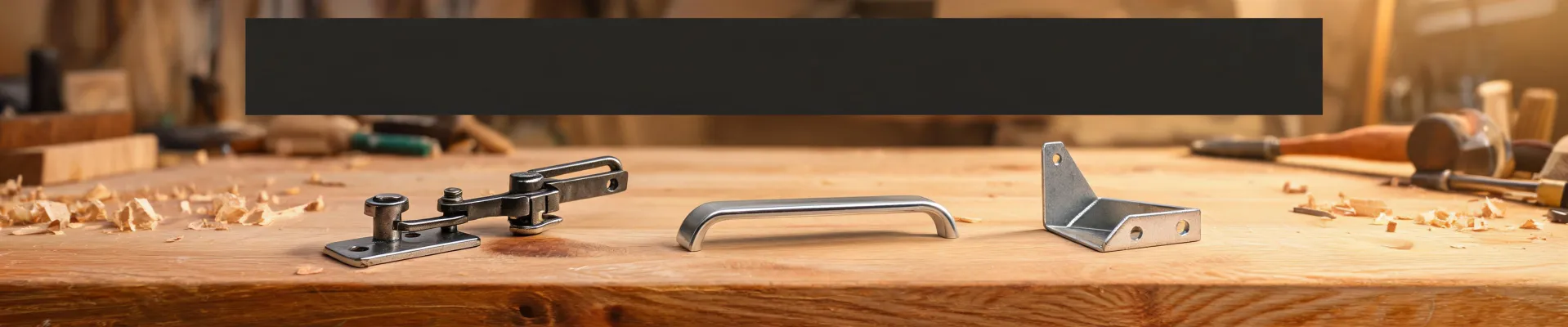
National Hardware Galvanized Gate Kit vs. Building Your Own Parts List: A TCO Comparison
-
What I'm Really Comparing
-
Dimension 1: Compatibility Kits Remove the Could-Fit Problem
-
Dimension 2: Coating Consistency Matters More Than the Word Galvanized
-
Dimension 3: Install Time and the Angle Grinder Rule
- Dimension 4: Total Cost Comparison
-
Dimension 5: When Part-by-Part Actually Makes Sense
-
So Which One Should You Buy?
Seven years ago, I bought all my gate hardware by the piece. Hinges from one supplier, latches from another, bolts from a bin. It felt thrifty. Then an $890 mistake taught me to look at the whole job, not the individual line items.
I handle procurement for a fence and gate installation company in the Pacific Northwest. In that time, I've made and documented 14 significant mistakes that added up to roughly $11,300 in wasted budget. Now I maintain the checklist that keeps my team from repeating them.
Everything I'd read about saving money said to buy from dedicated fastener suppliers and order only what you need. In practice, for a one-off gate build, the complete kit was usually cheaper.
What I'm Really Comparing
I'm comparing two ways to buy hardware for a standard swing gate.
- Path A: Buy a complete National Hardware galvanized gate kit, then pick a National Hardware gate thumb latch in the same finish. The kit usually includes the hinges, latch, brackets, and bolts.
- Path B: Build your own parts list from bins and online listings: hinges, thumb latch, bolts, washers, and anything you remember at 7:00 a.m.
I'll compare them on five dimensions: compatibility, coating consistency, install time, total cost, and when part-by-part actually makes sense.
Dimension 1: Compatibility Kits Remove the Could-Fit Problem
With a kit, the latch and hinge brackets came from the same design. The hole spacing lines up, and the bolt lengths match. That's boring, but on a gate job, boring is money.
With a parts list, every piece is a promise. I once picked up a thumb latch that was a quarter of an inch off from the pre-drilled holes in the gate frame. A quarter of an inch isn't much until you are at the site with a drill and no spare touch-up paint. I replaced it with a National Hardware gate thumb latch, and it fit on the second try. The first one went into a drawer.
So glad I double-checked the kit's hardware list before I ordered. Almost bought a separate thumb latch with the wrong finish. Would have been a call-back.
Dimension 2: Coating Consistency Matters More Than the Word Galvanized
Galvanized is not one uniform thing. Hot-dip galvanized coating per ASTM A153 is the standard I look for. Electro-galvanized is thinner and usually not made for exposed coastal or farm use. A kit from a company that spec's A153 gives you a known starting point. A self-assembled parts list can mix electro-galvanized brackets with hot-dip hinges without you noticing.
I did exactly that in September 2022. The bracket started rusting in 14 months. That meant a callback, a re-opened gate, and a customer who did not care that I saved $12 on the bracket. They saw rust streaks on a new-looking gate.
The same logic applies to screws. I once used a box of coated deck screws for landscape timbers and watched them fail in a season. Timbertite landscape screws cost more, but they are designed for ground contact and treated lumber. The extra cost is small next to the labor of digging out a failed screw.
Dimension 3: Install Time and the Angle Grinder Rule
Time is a line item. A parts list turns a straight gate install into a series of trips and guesses. You think you have the right hinge bolts, but the gate frame is box tubing with a different wall thickness, so now you're cutting bolts down in the driveway.
That's where angle grinder technique gets important. I'm not teaching a full safety class, but after a close call in July 2019, I changed how our crew works.
If someone asks me how to hold angle grinder for cutting, I say two things: use both hands, and keep the guard between your face and the wheel. Then let the disc cut straight instead of tilting it sideways into the workpiece. The wheel will bind if you force it sideways, and a kickback at that moment can cost you a glove at best.
Dimension 4: Total Cost Comparison
Let's run a real-ish number for a standard field gate. Kit path: $85 complete kit + $12 thumb latch + $10 shipping = $107. Parts path: $64 in pieces + $16 shipping + $22 in small parts I forgot + 1.5 hours of extra install labor at $40 an hour = $162. My actual records show the difference was larger because I also made a second trip.
I'm not claiming these are national prices. I'm saying the $20 cheaper parts list turned into the $55 more expensive project. That's total cost thinking. It's the framework I use now for every hardware buying decision.
The Crimping Tool Proof
The same framework is why my truck has a 3000crkit ratchet crimping tool set. It cost more than the $14 crimper I carried for years. But the cheap crimper left a terminal loose on a gate opener, and the opener failed. The ratchet set forces you to finish the crimp before releasing the handle, so under-crimping is much harder. Four years later, no failed connections.
Dimension 5: When Part-by-Part Actually Makes Sense
Now the part that surprises people: I'm not saying always buy the kit.
Part-by-part wins when you're repairing an existing gate. You don't need a full kit to replace one hinge. You need the exact hinge. It also wins if you already keep a stock of common hardware in your shop—your bins are your kit.
I have mixed feelings about kits. Part of me hates paying for bolts I already have. Another part remembers the February 2023 job where we drove to three stores because nobody had the right gate thumb latch. I reconcile this by comparing projects, not parts.
So Which One Should You Buy?
If you ask me, the National Hardware galvanized gate kit is not a luxury. For a new gate, it's a project-management tool. The same goes for purpose-made crimping tools, proper landscape screws, and taking a minute to learn angle grinder basics.
Before checkout, ask: Is this a new project? Do the parts need to match? Is the savings worth a second trip? If the answer to the last one is probably not, trust the TCO answer.
It took me four years and about sixty gate installs to understand that the cheapest bill of materials is not the cheapest job. Once I started counting time and rework, my hardware cost actually dropped.

Maren Jorgensen
Maren Jorgensen is an independent hand tool and torque applications analyst covering wrenches, pliers, screwdrivers, hammers, sockets, ratchets, hex keys, and tool sets. She applies ISO 6789-1 torque-tool conformance principles while examining jaw capacity, leverage, fastener engagement, torque range, accuracy, handle geometry, and material hardness. Her practical guides help tradespeople and procurement teams select suitable tools, plan controlled tightening, and compare durability without relying on brand reputation alone.