National Hardware Sash Lock N148-684: Field Notes on Pocket Door Kits, Versastack Tool Sets, and Hose Clamp Pliers
The pallet showed up on a Tuesday, the day after our warehouse manager asked me to take a closer look at the mixed orders. On top was a box labeled N148-684. Underneath it sat a National Hardware pocket door kit, a hex zinc plated lag screw 50-pack, and one of those 262-piece Versastack mechanics tool sets. Somewhere in the middle of the pile was a return slip with a question written in blue pen: 'What are hose clamp pliers?'
At first glance, that looks like an odd grouping. But if you work in B2B hardware, it isn't odd at all. Distributors, contractors, and retailers rarely buy one category. They buy what the job needs. The job on that pallet included a window lock replacement, a sliding door install, a fastener kit, a tool-storage set, and the kind of basic question that still needs a clear answer.
I'm the brand compliance manager on the quality side of National Hardware. I review roughly 200 unique product lines a year, mostly gate and door hardware, before they go to distribution and retail. I've been doing this since early 2022. Four years of checking spec sheets, pulling random samples, and occasionally rejecting a whole batch. My experience is based on mid-sized North American orders. If you're sourcing marine-grade hardware for coastal installations, some of these notes may not apply.
The N148-684 Sash Lock Passed the Test That Matters
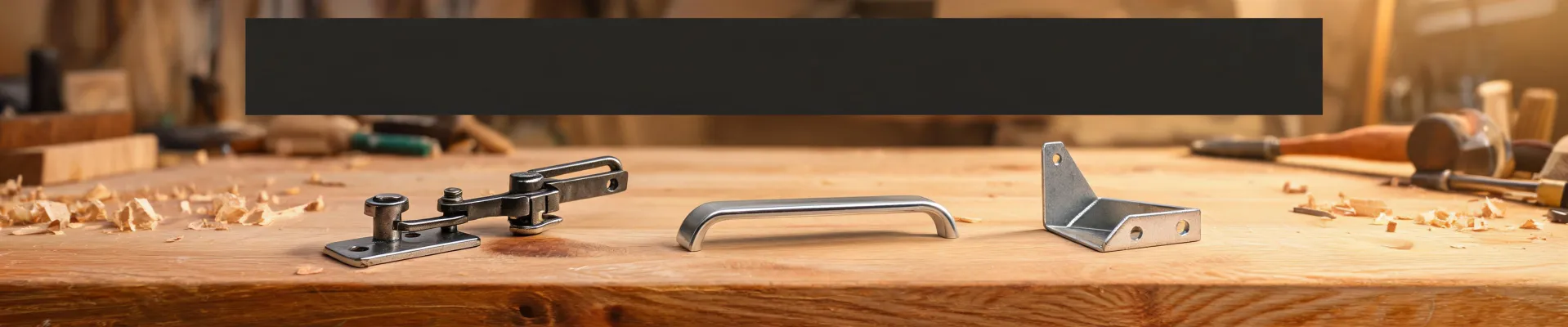
First up was the National Hardware N148-684 sash lock. This is a common replacement part for sliding windows and aluminum frames. The old one breaks, the customer needs a matching profile, and the lock has to fit without drilling a new set of holes. The N148-684 is popular because it's one of those direct replacements that doesn't require a lot of guesswork.
The first thing I check is alignment. A sash lock can feel flimsy not because the material is thin, but because the strike plate and cam meet at a poor angle. On this batch, they were within tolerance. The coating was even. The screws included were #6 x 1/2 inch wafer heads, which is exactly what you need for most aluminum frames. (Should mention: we also rotate the cam about two hundred times. That's where a poor casting starts to drag.)
A sash lock is one of those products where the spec sheet looks fine and the real quality shows up in small movements. The cam on this one snapped into place with a clean stop. No rough edge, no metal shavings, no handle that wobbles on the base.
Pocket Door Kit: The Surprise Was the Template
Then the National Hardware pocket door kit. If you've installed one of these, you know the routine: the track has to be dead level, the split studs have to line up, and the header bracket has to be positioned before the wall is closed. It's not the hardest job in construction, but it is easy to do in the wrong order.
The surprise wasn't the track width or the roller smoothness. It was the installation template. This kit includes a plastic positioning guide with the hole spacing printed right on it. That's a small thing, but it can save an hour on the job and keep the opening square while the header is still accessible.
The most frustrating part of pocket door hardware is that the existing framing is rarely square. You'd think a template would solve that, but if the opening is 1/4 inch out, no piece of plastic can fix it. This kit at least gave enough adjustment range in the hangers to make it work.
Hex Zinc Plated Lag Screw 50-Pack: A Simple Lesson in Coatings
In the middle of the pallet sat a hex zinc plated lag screw 50-pack. A lag screw is a heavy-duty wood fastener with a pointed tip and coarse threads. The hex head means you drive it with a socket or wrench rather than a screwdriver bit. The zinc coating is there to slow down corrosion.
Simple product, but easy to get wrong. We measure thread pitch, head height, and the thickness of the zinc coating. A coating that's too thin will show white rust in a damp warehouse. One that's too thick can fill the threads and make the screw feel hard to drive. This batch was consistent across all 50 pieces. That's the outcome you want from a fastener order.
Inside the 262-Piece Versastack Mechanics Tool Set
With the door and fastener hardware out of the way, I opened the 262-piece Versastack mechanics tool set. 262 pieces sounds like a lot, and it is, but what matters is what's inside. We opened all three drawers and counted: sockets from 4mm to 19mm in standard and deep, plus a full row of SAE sizes. The ratchets used a 72-tooth mechanism, and the handle had a solid feel.
The surprise wasn't the tool count. It was that the case didn't feel like a throwaway. The latches clicked, and the drawers stayed closed when the case was tilted. That sounds minor—until you've picked up a mechanics set by the handle and watched the contents scatter.
What Are Hose Clamp Pliers?
Now to that return slip. Hose clamp pliers are a specialized tool for removing and installing spring-type hose clamps—the round clamps commonly found on radiator hoses, heater hoses, and fuel lines. A regular pair of pliers or a screwdriver can sometimes work, but not well.
Hose clamp pliers have angled jaws that let you compress the clamp evenly, slide it along the hose, and release it without crushing your knuckles. Some versions have locking pawls, and some are made for right-angle access. That might sound niche. At least, that's been my experience with spring-type clamps on small engines and automotive work.
Note to self: we should keep a set in our training station. Every time I explain this tool to a customer, they ask where to buy one.
What I Changed My Mind About
Here's the part I wasn't expecting. When I started this job, I assumed 'good enough' hardware is a commodity. You order a sash lock, you get a sash lock. But in 2026, the difference is in the details: a pocket door kit with a template, a tool set that opens and closes the way it should, a zinc coating that doesn't flake off. The fundamentals haven't changed—a hinge still has to swing, and a lock still has to catch—but the execution has transformed.
What was best practice in 2022 doesn't necessarily apply in 2026. That's not a knock on older products. It's just what four years of inspecting samples has taught me. We still test against a basic performance baseline, and we use the Builders Hardware Manufacturers Association's grade framework as a common language: Grade 1 for heavy duty, Grade 3 for light duty. But the products that impress me are the ones where the basic specification is met and then a small usability detail is added.
The Takeaway
By the end of the morning, every item on the pallet was approved. The N148-684 sash locks went out with a green tag. The pocket door kits were marked for the next cross-dock. The Versastack sets made it to the shelf, and the lag screw 50-pack was restocked.
If I'm being honest, the old phrase 'hardware is hardware' doesn't hold up anymore. You can save money on simple items and get away with it. But for anything that moves, slides, or holds a door, the details matter. And for hose clamp pliers, the right tool matters more than people expect.
If you work with a different product line or a different installation environment, your mileage may vary. My experience is based on roughly 200 mixed orders over the last four years, and I can't speak to every specialty application. But if a National Hardware order lands on your loading dock, pay attention to the small things. That's where the progress is.

Maren Jorgensen
Maren Jorgensen is an independent hand tool and torque applications analyst covering wrenches, pliers, screwdrivers, hammers, sockets, ratchets, hex keys, and tool sets. She applies ISO 6789-1 torque-tool conformance principles while examining jaw capacity, leverage, fastener engagement, torque range, accuracy, handle geometry, and material hardness. Her practical guides help tradespeople and procurement teams select suitable tools, plan controlled tightening, and compare durability without relying on brand reputation alone.